
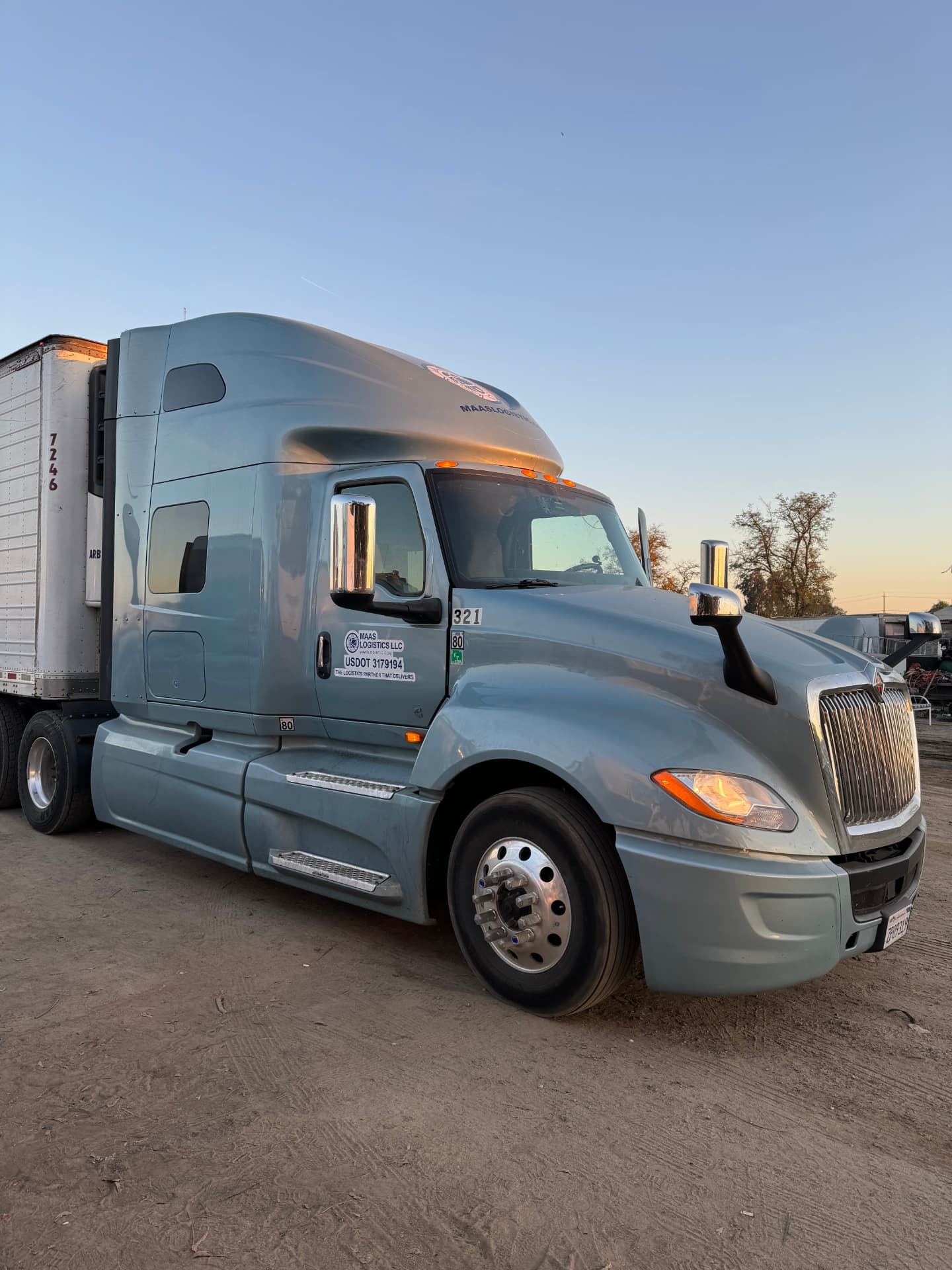
Carbon-neutral fleet goal · 2030
Sustainable trucking: cleaner freight, measured honestly
Maas Logistics LLC is upgrading its fleet toward electric Class 8 tractors with a stated goal of carbon neutrality by 2030. We are deliberate about what that means: fit-first deployment on the duty cycles where battery-electric trucks genuinely perform, measured against diesel baselines, with the data made available to the shippers who need it for their own reporting.
Our carbon-neutral trucking goal for 2030
Here is how a Texas truckload carrier approaches cleaner freight without overpromising.
- Carbon-neutral fleet goal
- 2030Carbon-neutral fleet goal
- Current tractor model years
- 2020–2025Current tractor model years
- How we measure emissions
- Ton-mileHow we measure emissions
- States served
- 48States served
Maas Logistics is transitioning toward electric Class 8 tractors with a stated goal of a carbon-neutral fleet by 2030, beginning with regional, base-returning duty cycles.
The approach
Fit first, measure everything, expand where it holds
- 01
Measure the diesel baseline
Fuel per truck and per lane, loaded and empty miles, idle hours and reefer unit fuel — tracked across a full seasonal cycle before any claims are made.
- 02
Cut the free emissions first
Reduce empty miles through backhaul planning, cut idling with APUs, maintain tire pressure and load trailers fuller. Ton-mile efficiency improves without new equipment.
- 03
Electrify where the duty cycle fits
Regional, base-returning runs with dock dwell that doubles as charging time. Long-haul reefer stays diesel until range and charging infrastructure close the gap.
Why we are honest about the limits
Battery weight reduces the payload a tractor can legally carry, high-power charging along freight corridors is still thin, and real-world range varies substantially with grade, temperature and load. A carrier that tells you electric solves everything today is selling something.
What is true is that the regulatory direction in our destination states is clear, the infrastructure investment is real, and carriers who start early absorb the learning curve gradually instead of all at once.
What shippers get from it
- A fleet that stays compliant as state and federal emissions requirements tighten
- Carrier-level fuel and efficiency data for your scope 3 reporting
- Fewer empty miles, which lowers both emissions and your rate over time
- A carrier planning past the next quarter on equipment strategy
- Straight answers about what electric equipment can and cannot do on your lane
Sustainability questions
Reference material we work from:
Need a truck this week?
Send us the lane and we'll come back with a rate the same business day. Dispatch answers 24/7 at (916) 770-7323.