
Maas Logistics Dispatch · Drivers & Hiring
How to Compare Trucking Job Offers: Pay, Miles, Dispatch, Equipment and Carrier Safety Records Side by Side
· By Maas Logistics Dispatch
When two or three carriers call you back in the same week, the offer with the biggest number on the recruiting flyer is not always the best job. A cents-per-mile rate means nothing until you know which miles get paid. A percentage of gross means nothing until you can see the gross. And a great rate at a carrier with a shaky safety record or a lease full of charge-backs can cost you more than it pays.
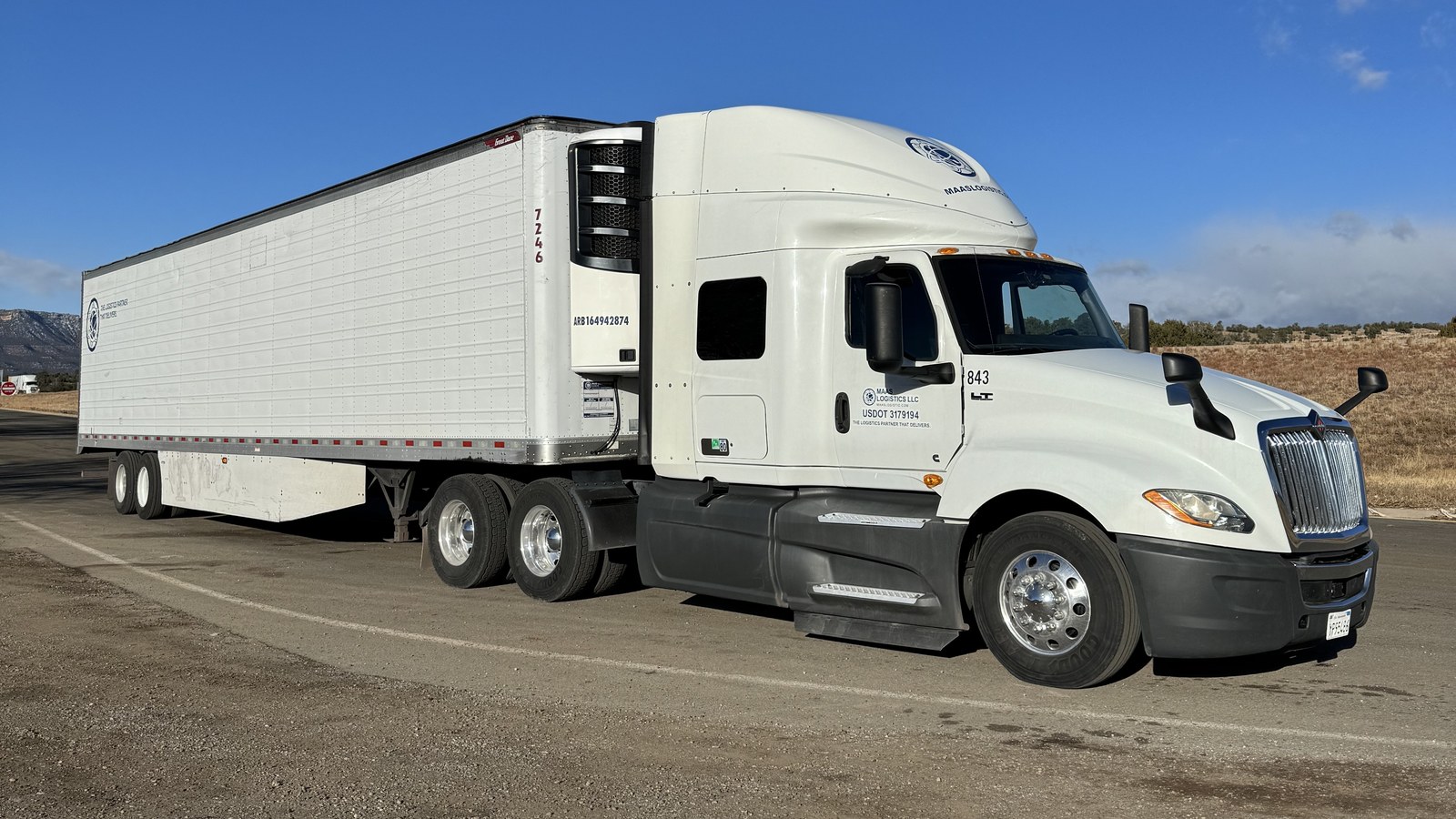
This guide shows how to compare trucking job offers side by side: how to turn CPM and percentage pay into numbers you can line up, what changes between a W-2 company job and a 1099 lease, which lease terms federal rules require a carrier to spell out, how dispatch and equipment affect what you actually take home, and how to check a carrier's public FMCSA record in a few minutes. It's written by Maas Logistics LLC, an asset-based dry van and reefer carrier in Melissa, Texas, on the north side of Dallas–Fort Worth, hauling full truckload freight across the lower 48 since 2018 — and we're hiring CDL-A company drivers and owner-operators, so we're one of the offers you might be comparing. This is a practical guide, not legal or tax advice.
Step 1: Get every offer in writing, in the same format
You can't compare a phone call to a PDF. Before you compare anything, ask each recruiter to put the offer in writing: the pay rate and how it's calculated, which miles are paid, how and when you get paid, what equipment you'll run, the type of freight, how loads are assigned, and — for owner-operators — the full lease with every addendum. If a carrier won't put it in writing, that tells you something too.
Then put the offers on one sheet using the same columns every time. The table further down is a good starting template.
Step 2: Turn every pay offer into the same unit
Most CDL-A offers come in one of three forms: cents per mile (CPM), a percentage of the load's gross revenue, or a weekly or daily guarantee. To compare them, convert each one into an estimated weekly gross using the same assumptions.
Cents per mile: ask which miles are paid
CPM is simple on paper — rate times paid miles — but carriers count miles differently. Ask:
- Are miles paid on practical route miles, shortest-route miles or actual miles driven? The difference can be several percent on every load.
- Are empty (deadhead) miles paid, and at the same rate as loaded miles?
- Is the rate different for dry van and reefer? (At Maas, company drivers earn 50+ CPM on dry van and 60+ CPM on reefer.)
- What's paid for stops, detention, layovers and breakdowns, and when does detention start?
Our CPM pay explained guide goes deeper on each of these.
Percentage of gross: ask to see the gross
Percentage pay is common for owner-operators. Two offers at different percentages can pay the same if one carrier's loads gross more per mile. Federal leasing rules help here: when an owner-operator's pay is based on a percentage of gross revenue, the lease must say the carrier will give you a copy of the rated freight bill (or equivalent documentation) before or at settlement, and every lease must let you examine the documents the rates are computed from (49 CFR 376.12(g)). If a carrier won't show you what the load paid, you can't verify your percentage. At Maas, owner-operators keep 87–90% of gross.
Build an apples-to-apples weekly estimate
Use the same weekly mile count for every offer — your own realistic number based on how you run and the freight type — not the recruiter's best-case week.
Illustration only (made-up numbers, not a Maas offer): Offer A pays 55 cents per mile on paid miles; Offer B pays 52 cents but also pays empty miles. If both trucks run 2,400 total miles a week and 300 of those are empty, Offer A pays on 2,100 miles (about $1,155) and Offer B on 2,400 miles (about $1,248). The lower rate pays more because more miles count.
Do the same for percentage offers: estimated weekly gross revenue times the percentage, minus the costs you'll carry (Step 4).
Step 3: W-2 company driver vs. 1099 contractor — compare after taxes and costs
A company driver is usually paid as an employee (W-2): the carrier withholds income tax and pays the employer share of Social Security and Medicare, and the truck, fuel and maintenance are the carrier's cost. A leased owner-operator is usually paid as an independent contractor (1099): you pay your own taxes and run your own truck as a business.
Two facts to put in your comparison:
- Self-employment tax. The IRS self-employment tax rate is 15.3% (12.4% Social Security and 2.9% Medicare) on net self-employment earnings, and you generally make estimated tax payments yourself. You can deduct the employer-equivalent half when figuring adjusted gross income (IRS).
- Your status is a legal question, not just a label. The U.S. Labor Department's new rule on employee vs. independent contractor status under the Fair Labor Standards Act was published in the Federal Register on Nov. 23, 2026, and takes effect Jan. 22, 2027; it focuses on control over the work and the opportunity for profit or loss (see our Nov. 23 news roundup). Federal leasing rules also say the carrier's exclusive-possession lease language is not meant to decide whether you're a contractor or an employee (49 CFR 376.12(c)(4)). Ask a tax professional about your own situation.
So a 1099 percentage offer and a W-2 CPM offer should be compared on what's left after taxes, truck payment, fuel, insurance, maintenance and other costs — not on the top-line number. Our owner-operator cost per mile guide walks through a break-even sheet.
Step 4: For owner-operators — compare leases line by line
Under 49 CFR 376.12, a lease between an owner-operator and a carrier must spell out key terms in writing. That makes leases easy to compare if you read them side by side:
- Compensation (376.12(d)). Pay must be clearly stated in the lease or an attached addendum delivered before the first trip — percentage of gross, a flat rate per mile, or another agreed method.
- Who pays for what (376.12(e)). The lease must say who covers fuel, fuel taxes, empty mileage, permits, tolls, detention and accessorial services, base plates and licenses, and who loads and unloads.
- Payment timing (376.12(f)). Payment must be made within 15 days after you submit the necessary delivery documents.
- Charge-backs (376.12(h)). Every item the carrier may pay and then deduct from your settlement must be listed, with how each amount is computed.
- No forced purchases (376.12(i)). The lease must say you are not required to buy or rent products, equipment or services from the carrier as a condition of the lease.
- Insurance (376.12(j)). The lease must state the carrier's public-liability coverage obligation, who provides other coverage such as bobtail, and the amount of any insurance charge-back.
- Escrow (376.12(k)). If escrow is required, the lease must state the amount, what it can be used for, how it's accounted for, interest paid at least quarterly, and return no later than 45 days after the lease ends.
Lay two leases next to each other and total up the charge-backs and escrow — that's often where two "88%" offers stop looking alike. See our lease-on guide for Melissa and DFW owner-operators and the owner-operator page.
Step 5: Compare how loads are assigned
Dispatch style changes your week as much as pay does. With forced dispatch, you take the loads you're assigned. With non-forced dispatch, you can turn down loads that don't work for your truck, your costs or your schedule. Ask each carrier directly, and ask what happens if you decline a load. Maas runs non-forced dispatch for owner-operators. More in our forced vs. non-forced dispatch guide.
Also compare the freight itself. Dry van and reefer jobs run differently — reefer adds temperature control, pre-cooling and often tighter appointment windows. Our dry van vs. reefer CDL jobs guide explains the trade-offs.
Step 6: Compare equipment and how you get paid
Ask each company driver offer: what model years run in the fleet, is the truck assigned to you, what ELD is used and how are logs handled, and how breakdowns are handled and paid. Ask how pay arrives — weekly or every two weeks, direct deposit or not. At Maas, company drivers get weekly direct deposit and owner-operators are paid weekly.
Step 7: Check every carrier's public FMCSA record
Before you accept any offer, look the carrier up. It takes minutes:
- Search the USDOT number on FMCSA's SAFER Company Snapshot. Confirm the legal name and address match the offer, the USDOT status is active, and the carrier has operating authority for the freight it hauls.
- Check the safety rating. FMCSA ratings are Satisfactory, Conditional or Unsatisfactory; many carriers are unrated. A rating is a point-in-time review, so read it with the inspection data.
- Look at inspections and out-of-service rates. SAFER shows the carrier's 24-month inspection and crash counts and compares its vehicle and driver out-of-service rates with national averages. FMCSA's Safety Measurement System (SMS) adds detail by category.
- Match the name on the trucks. The company you're hired by should be the carrier whose USDOT number is on the door and whose name is on your paperwork.
Our guide to vetting Dallas trucking companies before you apply covers more questions. You can check Maas the same way: USDOT 3179194, Satisfactory safety rating (see our safety page).
Side-by-side comparison template
| What to compare | Offer A | Offer B | Offer C |
|---|---|---|---|
| Pay type (CPM, % of gross, guarantee) | |||
| Rate (dry van / reefer) | |||
| Which miles are paid (practical, shortest, empty) | |||
| Detention, stops, layover, breakdown pay | |||
| Pay frequency and method | |||
| W-2 or 1099 | |||
| Charge-backs and escrow (owner-operators) | |||
| Dispatch: forced or non-forced | |||
| Freight: dry van, reefer, both | |||
| Equipment: model years, assigned truck | |||
| USDOT active and authority for this freight | |||
| Safety rating and out-of-service rates | |||
| Estimated weekly net after costs |
Questions to ask every recruiter
- How exactly is my pay calculated, and can I see it in writing before I start?
- Which miles are paid, and are empty miles paid?
- What do you pay for detention, extra stops and breakdowns?
- How often and how am I paid?
- Am I a W-2 employee or a 1099 contractor?
- (Owner-operators) Can I see the full lease, every addendum, the charge-back list and the escrow terms? Will I get the rated freight bill on percentage loads?
- Is dispatch forced or non-forced? What happens if I turn down a load?
- What's your USDOT number?
What you'll need ready when you choose
Whichever offer wins, every carrier must run the same federal checks before you drive: a pre-employment drug test and Clearinghouse query, your medical card, your record and past employers. Our DOT drug test guide and how to switch trucking companies explain what to expect. For the current freight market drivers are walking into, see our Nov. 25 news roundup.
Comparing Maas Logistics
If Maas is one of your offers, here's what we put in writing. Maas Logistics LLC is an asset-based dry van and reefer carrier in Melissa, Texas, founded in 2018, with 18 trucks, USDOT 3179194 and a Satisfactory safety rating. We haul our own loads with our own trucks and never re-broker.
- Company drivers: 50+ CPM dry van, 60+ CPM reefer, weekly direct deposit. CDL-A, 23+ with 3 years of experience. Apply as a company driver.
- Owner-operators: 87–90% of gross, non-forced dispatch, weekly pay (1099). Lease on with Maas.
Questions about an offer? Call 24/7 dispatch at (916) 770-7323. Shippers looking for an asset-based dry van or reefer carrier can request a quote.
FAQ
What is the best way to compare trucking job offers?
Get every offer in writing, convert each one to an estimated weekly gross using the same miles, subtract the costs and taxes you'll carry, then compare dispatch, freight, equipment and each carrier's FMCSA record side by side.
Is a higher CPM always the better offer?
No. Which miles are paid matters as much as the rate. An offer that pays empty miles or practical route miles can pay more per week than a higher rate on fewer counted miles.
How do I compare CPM pay with percentage pay?
Turn both into a weekly estimate. For CPM, multiply the rate by the paid miles. For percentage pay, multiply the load gross by your percentage, then subtract the costs you carry as an owner-operator. Federal rules require a carrier paying a percentage of gross to give you the rated freight bill (49 CFR 376.12(g)).
What should an owner-operator lease spell out?
Under 49 CFR 376.12, the lease must state your pay, who pays for fuel, tolls, permits and other costs, payment within 15 days of delivery paperwork, every charge-back and how it's computed, insurance obligations, and any escrow terms including return within 45 days after the lease ends.
How do I check a trucking company's safety record?
Search the carrier's USDOT number on FMCSA's SAFER Company Snapshot to see its status, operating authority, safety rating, inspections, crashes and out-of-service rates compared with national averages, and use FMCSA's SMS for more detail.
Sources: 49 CFR 376.12 (https://www.law.cornell.edu/cfr/text/49/376.12); IRS self-employment tax (https://www.irs.gov/businesses/small-businesses-self-employed/self-employment-tax-social-security-and-medicare-taxes); Federal Register, Employee or Independent Contractor Status final rule, Nov. 23, 2026 (https://www.federalregister.gov/documents/2026/11/23/2026-23777/employee-or-independent-contractor-status-under-the-fair-labor-standards-act-family-and-medical); FMCSA SAFER Company Snapshot (https://safer.fmcsa.dot.gov/CompanySnapshot.aspx); FMCSA Safety Measurement System (https://ai.fmcsa.dot.gov/SMS/).