
Shipper Guides
Refrigerated Truckload from DFW: What Shippers Need to Know
September 2, 2026 · 9 min read
Dallas–Fort Worth is one of the most important cold-chain distribution points in the United States. From the DFW metroplex, a refrigerated truck can reach Houston, San Antonio, Austin, Oklahoma City and Memphis in a single day, and the Mexican border at Laredo in about six hours. That reach makes DFW a reload and consolidation hub for produce, protein, dairy, beverage and temperature-sensitive manufactured goods — but it also means reefer capacity is competitive, especially when border produce season peaks.
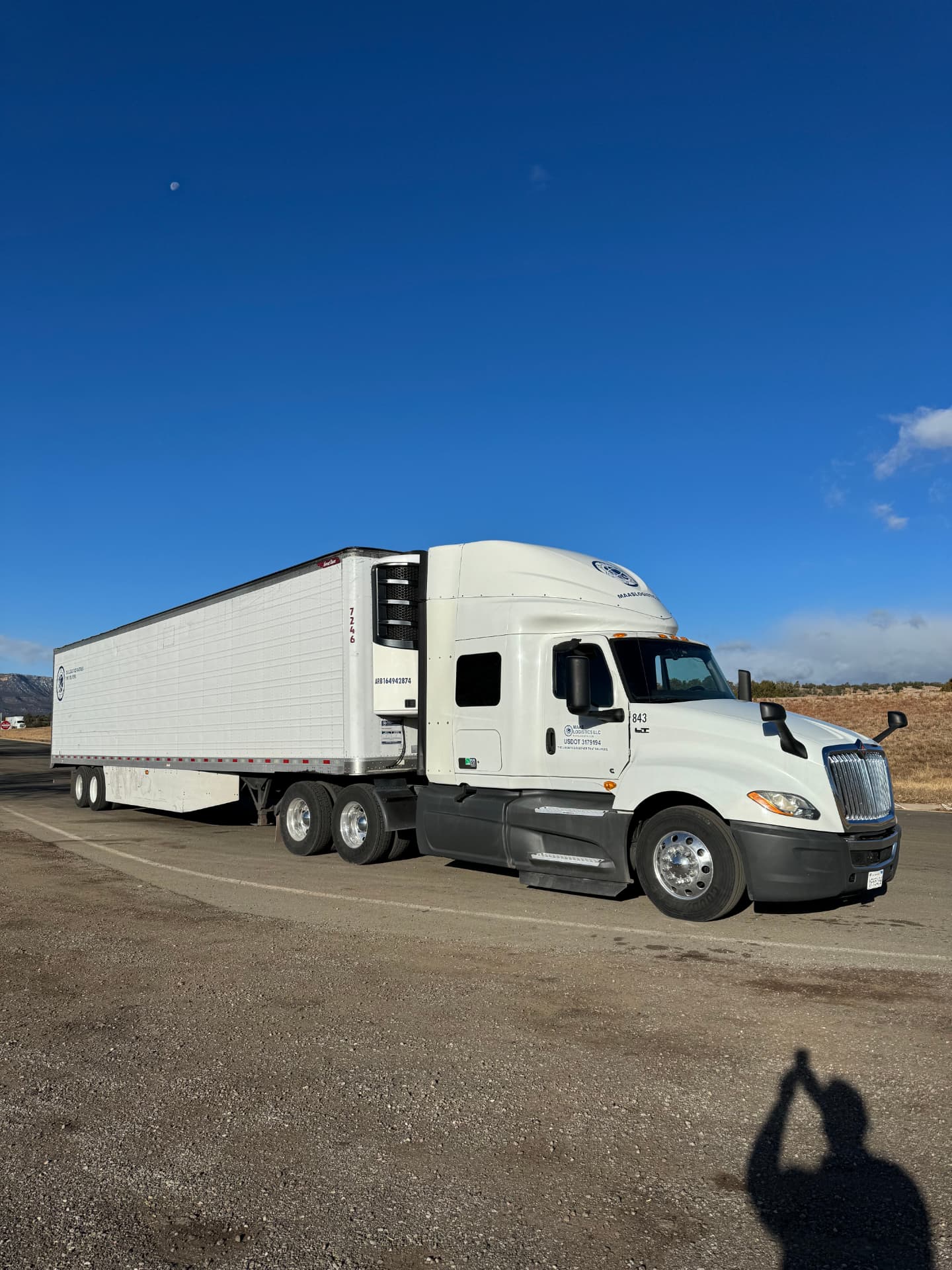
From DFW, a solo driver can legally reach Houston, San Antonio, Austin, Oklahoma City and Memphis within a single day, making it one of the best one-day freight radii in the country.
Why DFW works for refrigerated freight
Refrigerated truckload is about time and temperature. The faster a carrier can reach the receiver, the less fuel the reefer unit burns and the lower the risk of temperature drift. DFW sits at the intersection of I-35, I-20, I-30 and I-45, which gives it direct highway access to the Gulf, the Midwest, the Southeast and the border.
For shippers, that geography translates into faster response times, shorter empty repositioning and more options when a load falls through. A North Texas carrier can often recover a same-day reefer load in the metroplex that a distant carrier cannot reach until the next morning.
- One-day reach to Houston, San Antonio, Austin, Oklahoma City and Memphis
- Direct corridor to Laredo and Pharr for Mexican produce and protein
- Major cold-storage and distribution warehouse concentration in the metroplex
- Competitive reefer carrier base with dry van fallback on protect-from-heat freight
Temperature control is not one setting
The most common mistake shippers make on reefer freight is treating every load the same. Frozen, fresh and protect-from-heat freight each need different set points, run modes and pre-cool procedures. A load of ice cream at -10°F cannot share a trailer with fresh lettuce at 34°F, and wine shipped in August may need heat protection even though it is not 'refrigerated.'
Your bill of lading or load tender should specify the set point, acceptable range, run mode and pre-cool requirement in writing. That one step eliminates most temperature disputes before the trailer doors close.
- Frozen: -10°F to -20°F, cycle sentry usually acceptable
- Fresh produce and dairy: 32–38°F, continuous run preferred
- Beverage and protect-from-heat: 50–70°F, may require heat in winter
- Pharma and high-value: continuous run with data logging and tight range
FSMA compliance for outbound reefer freight
The FDA's Sanitary Transportation of Human and Animal Food rule applies to most food moving in refrigerated equipment, regardless of whether it is produced in Texas or just passing through. Shippers are responsible for specifying requirements in writing; carriers are responsible for meeting them and maintaining records.
When you book reefer capacity from DFW, confirm that the carrier can produce downloadable temperature data for the full transit, not just a single reading at delivery. Ask how long records are retained and how quickly you can get them if a receiver dispute arises.
- Specify set point, range, run mode and pre-cool in writing
- Confirm prior-cargo restrictions and washout requirements
- Demand continuous temperature data covering the full transit
- Retain records for the carrier's stated retention period
Seasonal capacity pressure from the border
DFW reefer capacity does not move in isolation. From December through April, Mexican produce crossings at Laredo and Pharr pull reefer trailers south and east. From April through June, Texas onions, melons and greens add volume. During those windows, non-produce shippers compete with fresh product for the same trailers.
If your freight is temperature-sensitive but not produce — beverage, dairy, pharmaceuticals, protect-from-freeze — the best strategy is to contract capacity before the season starts, widen pickup windows during peak weeks and consolidate into full truckloads rather than frequent partials.
- December–April: peak Mexican produce crossings tighten capacity
- April–June: Texas harvest adds regional reefer demand
- July–August: heat waves increase protect-from-heat and beverage volume
- September–December: retail peak pulls both dry van and reefer capacity
How to vet a DFW reefer carrier
Not every carrier with a refrigerated trailer is equipped for your freight. Ask about the age of the reefer units, whether the fleet runs telematics with temperature streaming, and what the standard detention and layover terms are. A carrier that answers with specifics — unit model years, ELD platform, washout policy — is usually a safer bet than one that only quotes a low rate.
- What is the model-year range of your tractors and reefer units?
- Can you provide live GPS and temperature data on every load?
- What are your standard detention and layover terms?
- How do you handle pre-cool, washout and prior-cargo restrictions?
- Are you an EPA SmartWay partner or tracking equivalent emissions data?
Booking a refrigerated truckload from DFW
When you are ready to move freight, have the following ready: origin and destination addresses with dock hours, product and temperature requirements, weight and pallet count, pickup and delivery windows, and any appointment or lumper requirements. The more detail you provide up front, the faster the carrier can confirm capacity and the fewer surprises appear at the dock.
Maas Logistics runs refrigerated trucking from the DFW metroplex and surrounding North Texas corridor, with 24/7 dispatch and live tracking on reefer loads. See the lanes we run on our Dallas–Fort Worth freight shipping page, or request a freight quote with your lane and requirements and we will come back the same business day with a rate and equipment confirmation.